Tuesday's
Wall Street "Personal" Journal (October 5, 2010 page D1) headline article ("
How Handwriting Trains the Brain" by Gwendolyn Bounds) relates that writing by hand engages the brain in learning. What she does not address is how.
How Handwriting Engages the Brain: When writing by hand (with pen on paper or finger on an ipad), you are using more muscles and more memory pathways than when typing or keyboarding. As I wrote last week, writing involves many different brain activities and brain regions. It involves
memory (remembering letters, words, and ideas),
attention (making sure you are writing what you want to write, in the right format, spelling and grammar),
sequencing (making sure letter, words thoughts are expressed and written in the proper order),
cognition (making sure you are addressing what you want to address, and generating and synthesizing original thoughts).
Writing by hand provides additional brain channels and associations that trigger memory and cognition. Picture a file cabinet with a lot of cross-filing! By hand writing, your brain is involving more centers and more skills. There are more ways your brain is recognizing, associating, processing and storing the information.
The good news:
- New software for touch screen devices enables old and young to practice handwriting on the screen. Hence practicing handwriting is a lot more fun.
- Lower Schools still focus on handwriting.
- Upper schools - I never thought I'd say this but there may be a silver lining to the SAT's as they require a handwritten essay. Many high schools and SAT tutoring services address this. Your child is practicing not only handwriting skills (so graders can actually decipher the gist of the essay), they are working on developing and maintaining multiple cognitive and memory pathways.
Boosting the skills, without the traditional drills:
- No matter how old your child is, provide handwriting opportunities. Creating/writing birthday, anniversary, thank you cards, invitations, are easy ways to do this. Your kids can draw, write, create messages, pop-up art while communicating a message.
- For middle and upper school kids - encourage taking/making study notes, summary sheets. The actual re-writing of the essential material is another way to involve and create memory and recall paths.
- Leave notes for each other at home. Have a message center -maybe the refrigerator, a box on the kitchen counter. Leave notes for the Tooth Fairy and Santa. Write chalk messages in your driveway.
- Get in the habit of making checklists. Write checklists for shopping, for remembering how to form an essay, for how to do long division, how to reboot the wireless router... (you get the idea).
- Create and write up favorite recipes.
In case you want more structured, directed handwriting drills, here are some iPad and iPhone software products Gwendolyn Bounds suggests in her article:
- "WritePad" - a $3.99 application for the iPhone that accepts handwriting input with a finger or stylus and then converts it to text (for email, documents, or Twitter updates).
- "abc PocketPhonics" - a $1.99 app (again for the iPhone) that instructs kids how to draw letters with their fingers or stylus. Cheering pencils appear with correct movements.
Maybe you have other suggestions. I know we'd all like to read them, so please leave suggestions, further questions or comments!
 I find myself torn this week between two reaction posts and so have decided to combine them under one heading...WAY WRONG. One has to do with a comment left in an earlier post about "wasted potential" and the other a response to a front page New York Times article, Sunday June 10, 2012 "Risky Rise of the Good-Grade Pill" Please let me know what you think in the comments.


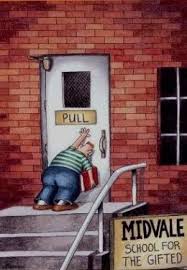
- These students often have weaknesses that are not always or easily found because the gifted can better mask and overcompensate. It is our job to find their Achilles heels and help them reach their potentials. We can do this by observing them in and out of class, noticing their successes and better accepting and understanding their failures. I truly believe students always initially try; they breakdown with continued failures (both seen and unseen).
- Another source of underachieving is ATTENTION. The material is often too slowly presented or the content too shallow and they go off on mind-trips to further stimulate their intellect. It is our responsibility to help them better discipline and refine their attention by helping them better recognize when they take mind trips; helping them regroup when mind trips have been taken; and empowering them with strategies to prevent the mind trips.
- A third source is undisciplined work habits. So often content is too easy they never learn how to STUDY or PREPARE content because they have been able to 'wing' it. This inevitably comes back to bite them. They have to be challenged and taught how to break work down and how to best prepare. They, like everyone else must learn how to STUDY, RESEARCH, and RELATE.
And, we as parents and teachers must advocate for their needs. The truth is I see gifted as wasted potential from a totally different perspective. There are so many GIFTED and TALENTED among us, many of whom are not even noticed. We are so busy trying to get everyone to meet certain standards, the 'bar' for the talented is lowered or ignored. It is these kids who go unnoticed and unchallenged who are WASTED POTENTIAL - and a wasted resource.2. Risky Rise of the Good-Grade Pill - A response
Sunday, June 10, 2012 New York Times front page article: "Risky Rise of the Good-Grade Pill: Taking stimulants Not for a High, but for a Higher SAT Score by Alan Schwartz
First, a brief synopsis of the article:
I admire the mom who checks and watches her son take his meds, but parents can't always do this. We can't easily or effecitively 'drug test' before exams, schools have little way of monitoring either. We may need to more closely monitor the labeling and prescription giving. Maybe, drugs for minors need to be 'administered' by parents and school personnel only - although I doubt this is practical or even possible. Part of the solution, however, also lies in relieving the source of their stress. We somehow have to address this incredible competition for colleges and the roles the 'gatekeepers' play. Maybe we as parents have to realize and relay to our kids that getting into that Ivy League college is not the only solution for success. There are other excellent institutions and other equally successful options and paths your young adults can follow on their journey to inner growth, intellectual growth, and success.
For anyone interested in links for drug abuse/addition here are some links:
The bottom line is we are hurting our kids' and our nation's future. Where do we begin?